
(805) 261-2630
sales@selectramps.com
Mon-Fri: 9AM - 6PM PST
(805) 261-2630
sales@selectramps.com
Mon-Fri: 9AM - 6PM PST
(805) 261-2630
sales@selectramps.com
Mon-Fri: 9AM - 6PM PST
(805) 261-2630
sales@selectramps.com
Mon-Fri: 9AM - 6PM PST

A DIY curb ramp is cheap on day one and expensive after that: lumber rots and splits under a tire, a poured concrete or asphalt wedge blocks the gutter and is illegal in many cities, and a cut-up tire or rubber mat slides into the street. A purpose-made rubber driveway ramp costs more up front, bolts to itself instead of the curb, drains underneath, and comes off without a trace when you move. If the ramp will stay at the curb for more than a season, buy one.
A temporary ramp on private property is a different problem. A plywood wedge at a shed door, a lumber ramp over a garage threshold, or a mat at an interior step is not in a gutter, not in a right-of-way, and not under a car twice a day. Build those. The curb at the street is where DIY stops making sense.
The bought rows are BRIDJIT sets, molded in the USA from recycled tires, with a 2.5 in drainage channel underneath, tapered ends, no anchors, and a five-year manufacturer warranty.
| Option | Time to build or install | Lasts | Drains the gutter | Removable | Fits a rolled curb | Right-of-way risk |
|---|---|---|---|---|---|---|
| Plywood or lumber wedge | 1–2 hours | Months | No | Yes | Poorly | Blocks gutter; often cited |
| Poured concrete or asphalt | Half a day plus cure | Years, until removed | No | No | Can be shaped | Prohibited in many cities |
| Stacked rubber mats | Minutes | Years | No | Yes | No taper | Blocks gutter; shifts |
| Cut tires or scrap rubber | Hours | Varies | Partly | Yes | No | Usually cited |
| BRIDJIT Expandable Driveway Curb Ramp Set |
30 minutes, two people | 5-year warranty | Yes, 2.5 in channel | Yes, bolts to itself | Yes, molded to the roll | Not anchored; usually allowed |
| BRIDJIT Portable Driveway Curb Ramp Set |
None, set and go | 5-year warranty | n/a, loose sections | Yes, nothing left at curb | Yes | Nothing installed |
See both in the BRIDJIT collection or browse all curb ramps.
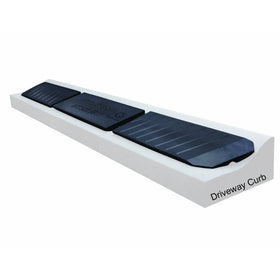
Two people, a hammer, a screwdriver, and about 30 minutes for the Expandable set: lay the labeled sections along the curb, tap the pre-set bolts through, leave the nuts loose so the run flexes, flip it onto the curb. No concrete, no cure time, no permit question. The Portables take no time at all; set one under each tire track and drive at them straight. The BRIDJIT guide has the full sizing and install walkthrough.
If a DIY wedge is in your gutter now, the fastest way to get ahead of a complaint is to pull it before the next storm and measure the curb opening for a set that covers it. Sizes run 11.75 ft to 23.5 ft. If your curb is a vertical 6 in face rather than a rolled curb, a driveway ramp is not the fix; contact us before ordering. For the general case, including low cars and RVs, read the driveway curb ramp guide.
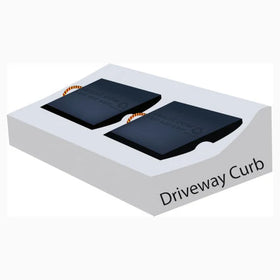
In many cities, no. The curb and gutter are public right-of-way, and permanent work there is prohibited; it also blocks drainage. Check your local ordinance before pouring. A removable rubber ramp with a drainage channel is the option that is usually allowed.
For a car at the street, no. Plywood soaks up gutter water, splits under a tire, shifts in a storm, and blocks the gutter. It is fine for a temporary ramp on private property, such as a shed door.
So gutter water passes under the ramp instead of pooling at the curb. Standing water is the usual trigger for a city or HOA complaint and, in winter, an ice patch. BRIDJIT ramps have a 2.5 in channel running the full length of the underside.
Many cities and HOAs allow a removable rubber ramp that is not anchored to the curb and does not block the gutter. Rules vary; confirm yours before installing.
BRIDJIT warrants its ramps against defects for five years to the original purchaser. Molded recycled-tire rubber does not rot or rust; UV fading and chemical exposure are the listed exclusions.
This guide is general information. Curb and gutter rules vary by city and HOA; confirm yours before building or installing anything at the street.